

ELVIS STYLE
The Haberdasher: Elvis in the 1960s.
Elvis was a good-looking man, but in a suit he was a real eye-catcher. LEFT: Elvis is styled in a classic sports jacket. Seen here on location during the filming of It Happened at the World’s Fair. Circa 1963.
RIGHT: Elvis in his first press conference at Graceland after being discharged from the U.S. Army in March 1960.
Elvis is wearing a black button-down shirt with a large, upturned collar. The gold circular pendant necklace rests against his chest where the shirt is partially unbuttoned. Elvis was frequently photographed in various shirts, ranging from classic and casual to more eccentric styles. The high-collared black shirt seen here is consistent with his signature look during the late 1950s and early 1960s.
His appearance in this image features his famous dark pompadour hairstyle and sideburns, became iconic symbols of his image.
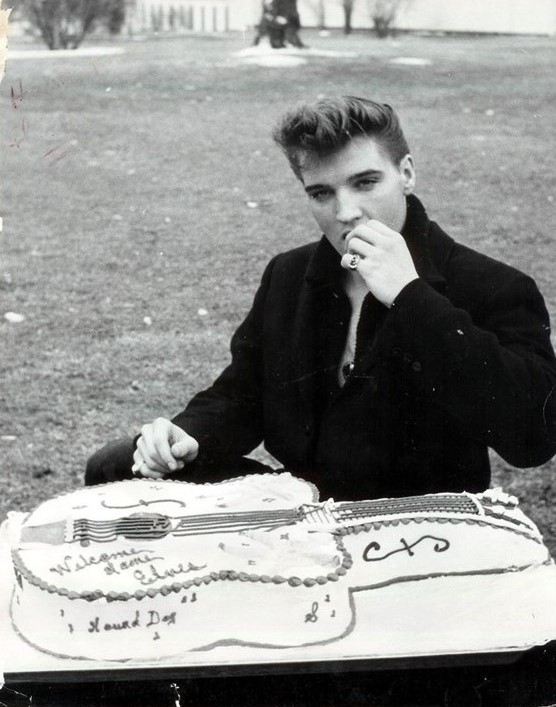
PERSONAL STYLE
ELVIS BACK AT HOME AFTER BEING
HONORABLY DISCHARGED FROM THE ARMY
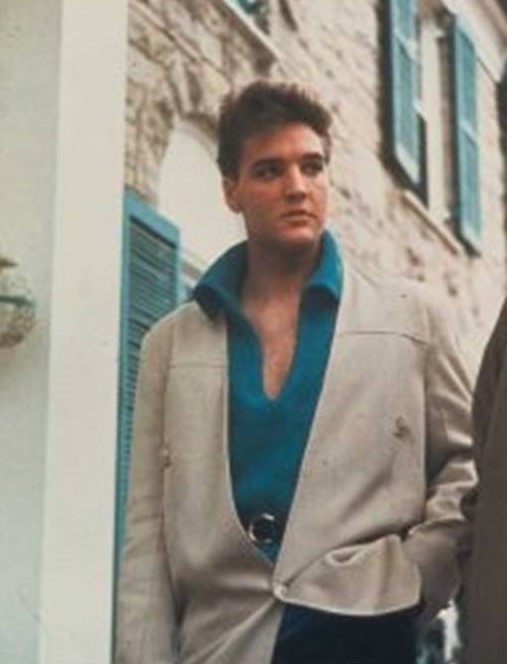
LEFT: Elvis in his personal style is wearing a casual yet sharp ensemble featuring a relaxed-fit, light beige blazer. The jacket appears to be made from a lightweight material like linen or cotton and features wide lapels and a single-button closure. The vibant teal-blue shirt underneath the blazer, is a polo-style with a prominent, wide-spread collar worn over the lapels of the jacket. The shirt has a deep V-neckline. He is also sporting a dark belt with a noticeable silver or metallic buckle that is visible at his waistline. While mostly obscured, he appears to be wearing dark trousers, possibly navy or black, to complement the lighter jacket and bright shirt. Circa 1960.
RIGHT: With a different camera angle, the sweater underneath the jacket appears to be tan in color.

TELEVISION APPEARANCE
MARCH 26, 1960, FRANK SINATRA TIMEX SHOW
“WELCOME HOME ELVIS”
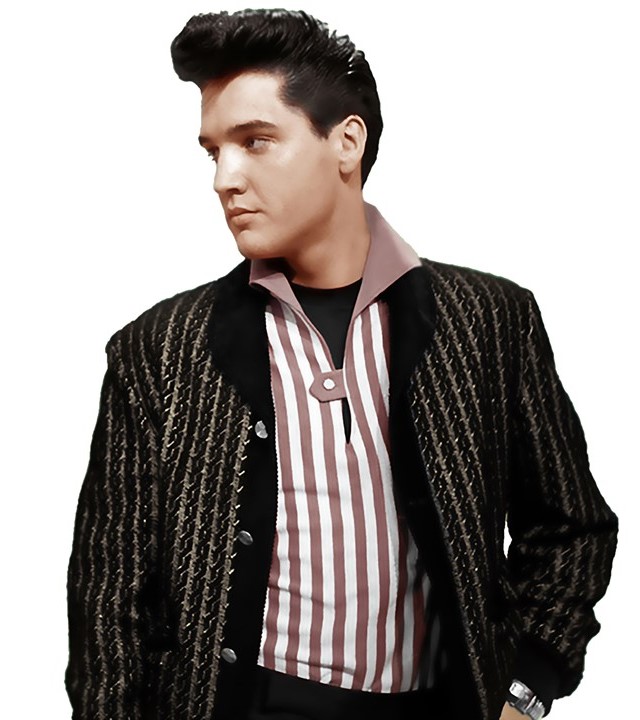
Rehearsals for the Welcome Home Elvis Special on Frank Sinatra’s Timex Show were held on March 26, 1960. During the rehearsal Elvis sported a sharp striped mauve and white colored pullover with a solid collar. Topping this off with a brown and black knit with a black collar, black placket, and large silver buttons down the front.
The show was aired on May 12, 1960. Elvis sang a verse at the show’s beginning called It’s Nice to Go Trav’ling. For this special Elvis performed Stuck on You and Fame and Fortune. He also participated in a duet with Frank Sinatra, singing a medley of Love Me Tender and Witchcraft.
MOVIE SECTION
G.I. BLUES
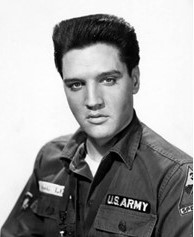
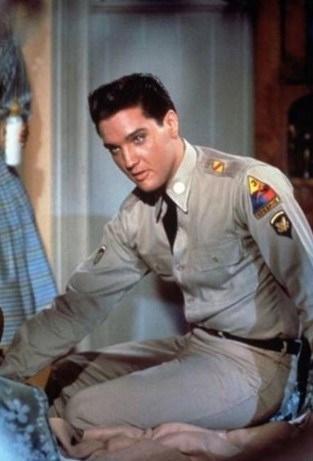
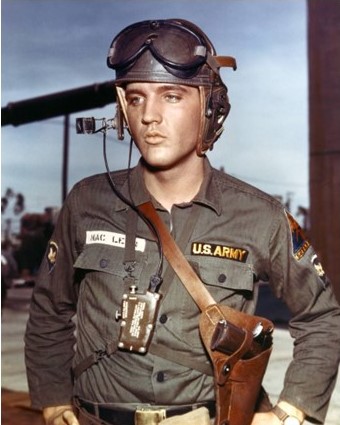
It is a misconception about Bill Belew being the wardrobe designer for G.I. Blues. As stated before, Belew did not begin designing for Elvis until 1968. G.I. Blues was released in 1960.
The true costume designer for G.I. Blues was Edith Head. Not only did she design Elvis’s wardrobe but also the costumes for Juliet Prowse, with the beaded dance costume which stands out among all the other designs in the film.
As far as the designs for the Army uniforms, there isn’t a specific law directly preventing movies from copying military uniforms. There are regulations and guidelines regarding the use of military insignia, trademarks, and the portrayal of military personnel in entertainment. Federal law does prohibit the unauthorized use of military trademarks or the misrepresentation of military service for personal gain. The Department of Defense (DOD) and individual military services have policies regarding the use of their names, insignia, and uniforms in promotional or advertising materials.
MOVIE SECTION
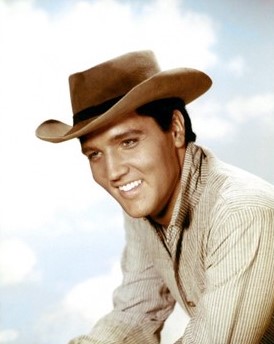
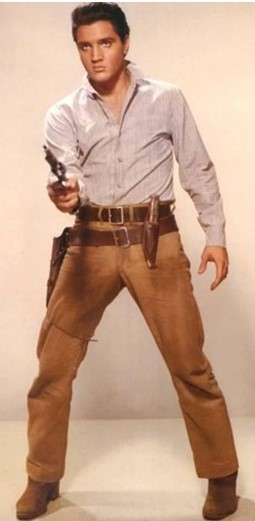
FLAMING STAR
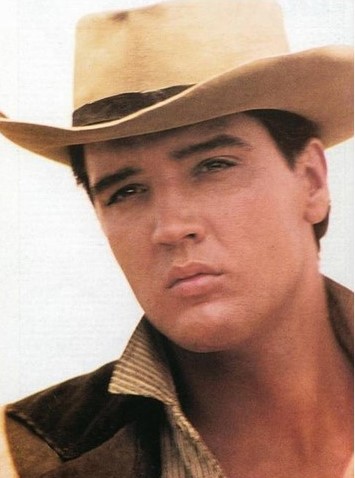
Flaming Star is a period western making this Elvis’s sixth film. At twenty-five, Elvis plays a mixed-race man whose mother is Kiowa and father is white. Elvis is outfitted in western designs indicative of the time. The costume designer for this 1960 movie was Adele Balkan.
Adele Balkan was born on August 27, 1907, in Alameda County, California. She was an American costume designer, known for The Fly (1958), From Hell to Texas (1958), Mighty Joe Young (1949), and The Blue Angel (1959). During Hollywood’s Golden Age, she designed for forty years on motion pictures. In an interview with Barbara Hall before Balkan died, in the transcript she stated a difference between her and Edith Head. A recommendation Edith Head made to her was to make the costume sketch in the shape and proportions of the actress who would wear the garment. Balkan stated, “That was very bad. They came out thick and short…. They had no sweep, they had no movement. You have to exaggerate. You have to really make a sketch that everybody’s excited about. The producer, the director, the star. And then you have to work to make her look like that.” In my opinion, this is probably why people believe that the Hollywood stars of old looked close to perfection when they really weren’t.
Adele Balkan died on November 20, 1999, in Los Angeles, California.
MOVIE SECTION
WILD IN THE COUNTRY
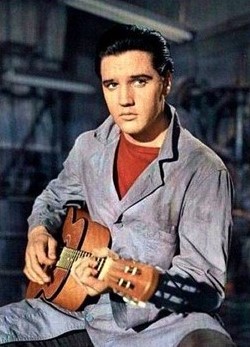

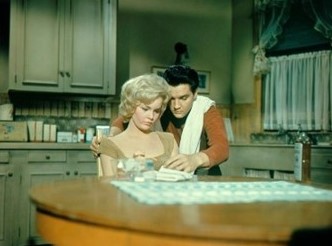
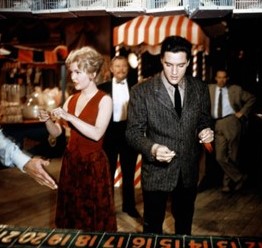
The costume designer for Elvis Presley’s wardrobe in the movie Wild in the Country was Donald Lee Feld (Donfeld). He is listed as the costume designer in the film’s full cast and crew.
Donfeld was a prominent Hollywood costume designer known for his work on films like Days of Wine and Roses, They Shoot Horses, Don’t They?, and “Diamonds Are Forever”. He also designed the iconic Wonder Woman costume for the 1970’s TV series starring Lynda Carter.
Donfeld was a four-time Oscar-nominated American costume designer known for his work on films such as Spaceballs, Prizzi’s Honor, and The Great Race.
MOVIE SECTION
BLUE HAWAII
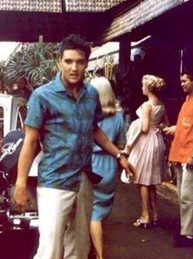
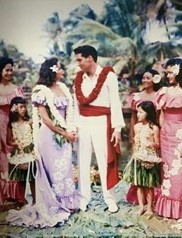
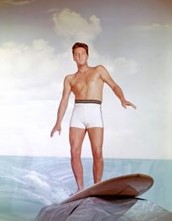
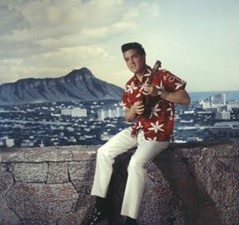
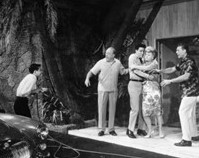
The costume designer for the movie Blue Hawaii was Edith Head. She was known for her iconic work in Hollywood and won eight Academy Awards for her costume designs. There are several books written on Edith Head, and I feel fortunate to have two in my library.
Edith Head designed most of Elvis’s wardrobe for Blue Hawaii starting with the Army uniform. When most Hawaiian shirts are loose and unflattering, Head designed Elvis’s aloha shirts to be fitted and tailored. She also designed his tailored white jacket, warm beige tie, worn with sleek black trousers. The work shirts were off-white and blue with a catamaran on the breast pocket for the movie’s tour guide company logo. Lastly, there was the stylish wedding ensemble consisting of a white billowy sleeved shirt and sleek white trousers.
The swim trunks worn by Elvis were designed by Alfred Shaheen and his lead artist, Robert Sato, who also created the “Tiare Tapa” print. The “Tiare Tapa” print was a popular design by Shaheen that was used on various items like shirts, dresses, and hats which were part of Shaheen’s overall design work for the movie.
MOVIE SECTION
FOLLOW THAT DREAM
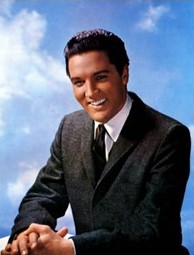
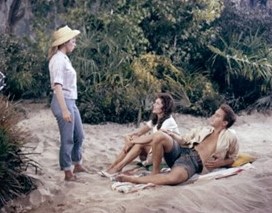

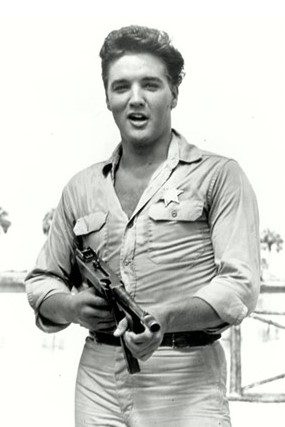
Ruth Hancock and Sid Mintz were wardrobe designers for Follow That Dream (1962).
Sid Mintz was born on May 5, 1899, in Russia. Mintz is known for his designs in Jiggs and Maggie in Society (1947), Sabu and the Magic Ring (1957), and Follow That Dream (1962). Mintz died on February 19, 1985, in Hollywood, California, USA.
As of this date, June 14, 2025, we don’t really have any in-depth information on Ruth Hancock.
MOVIE SECTION
KID GALAHAD
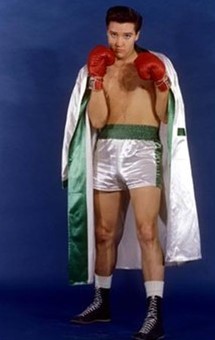
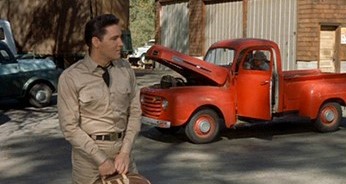
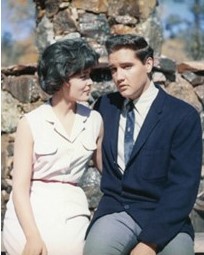
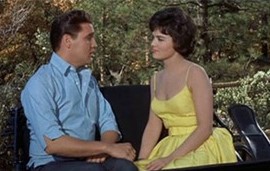
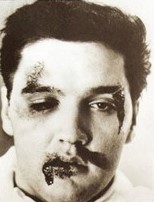
Listed in the credits for the film Kid Galahad, the wardrobe designers for Elvis Presley were
Bert Henrikson and Irene Caine.
You may not have heard of Henrikson, but he was the costume designer for Some Like It Hot (1959),
West Side Story (1961), and The Great Escape (1963). He was born on June 9, 1911, in Union, Indiana and died on February 26, 1997, in Encinitas, California.
We have a tendency not to pay real attention to the make-up artists who top off the garments worn.
MOVIE SECTION
GIRLS! GIRLS! GIRLS!
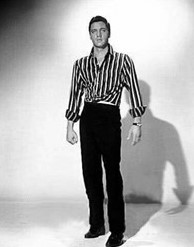
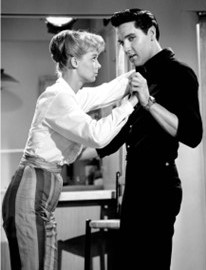
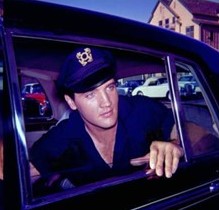
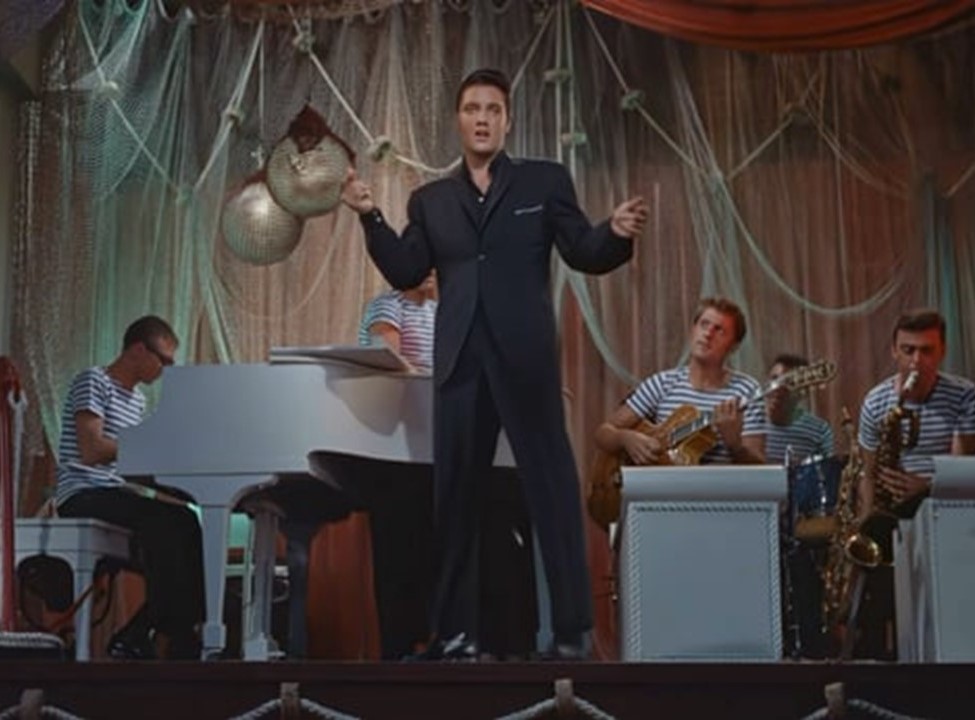
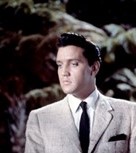
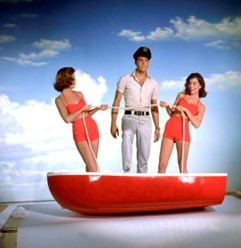
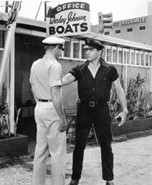
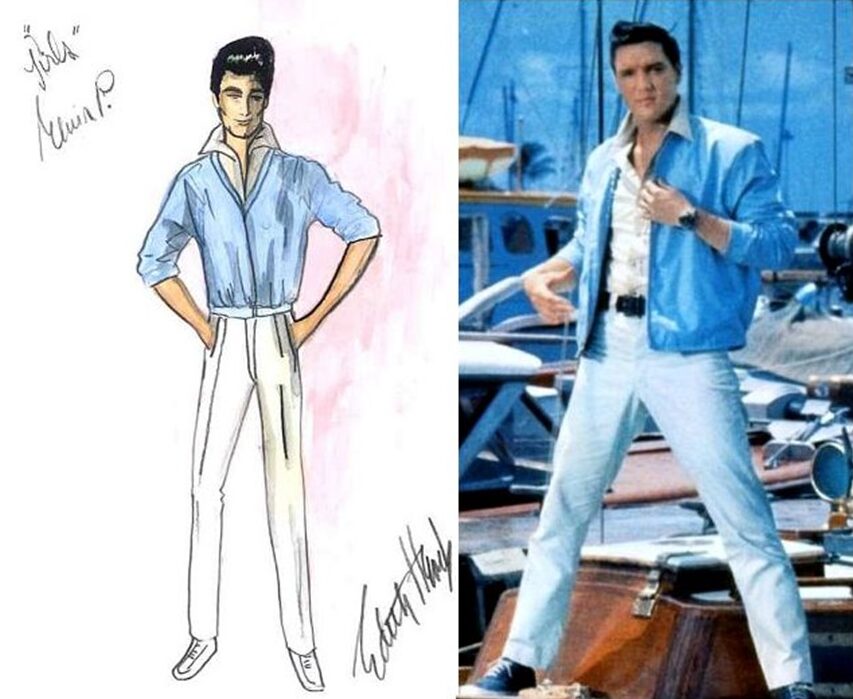
Edith Head was the designer for Elvis’s wardrobe for the Girls! Girls! Girls! (1962). We know
B&K Enterprises Costume Company & Wikipedia claim that it was Bill Belew who designed Presley’s wardrobe, but Belew didn’t begin designing for Elvis until 1968 and continued to design for Elvis until Elvis’s death in 1977.
There is so much you can say about Edith Head. She was known for her exceptional talent in creating costumes that reflected the character and enhanced the performance of the actors. She was an inexhaustible creator who throughout her career worked on over 1,000 films. She designed for many of Hollywood’s biggest stars, including Audrey Hepburn, Grace Kelly, and Elizabeth Taylor. She is also known for other famous film costumes, such as the sarong for Dorothy Lamour in The Jungle Princess (1936) and the toreador pants for Audrey Hepburn in Sabrina (1954).
MOVIE SECTION
IT HAPPENED AT THE WORLD’S FAIR
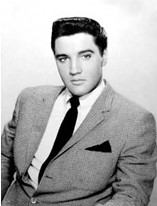

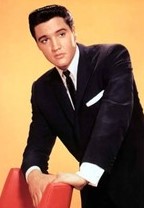
The clothing that Elvis wore in the film It Happened at the World’s Fair was fashioned by renowned Hollywood tailor Sy Devore. According to producer, Ted Richmond, Devore designed a line of conservative suits and ties for Elvis with the intention of projecting him as a “clever, well-dressed young businessman.” According to Elvis Australia, Devore designed ten suits, two cashmere jackets, four sport coats, fifteen pairs of pants, thirty shirts, and fifty-five ties as part of the entire movie wardrobe. The clothing cost was $9,300 in total.
By 1960, Elvis had solidified his position as a client of Sy Devore, who was also tailoring Frank Sinatra, Dean Martin, Sammy Davis, Jr., and their peers. By profession, Devore was a tailor, but he prudently broadened his skills to keep up with the ongoing trend toward casualness. He was now making the King’s distinctive shirts and pullovers in addition to the Rat Pack’s trademark narrow ties and sharkskin suits.
MOVIE SECTION
FUN IN ACAPULCO
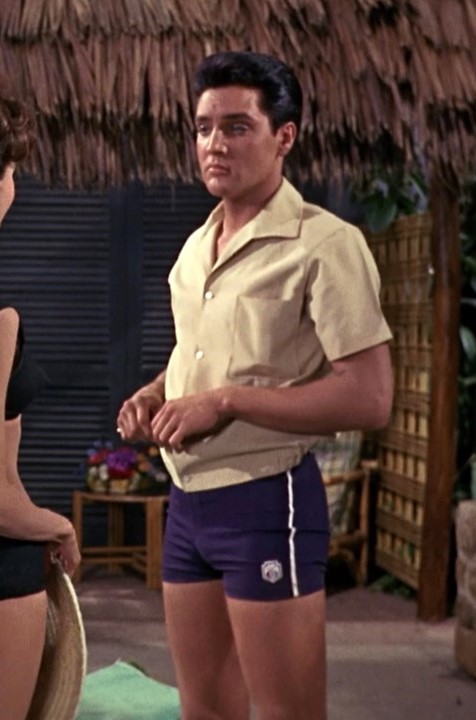

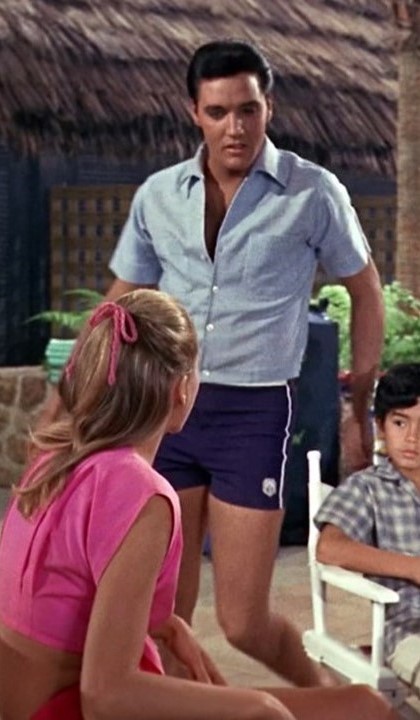
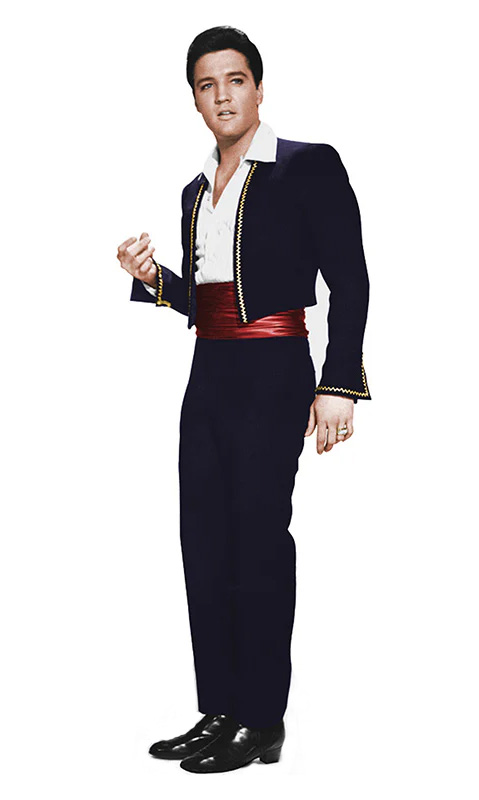
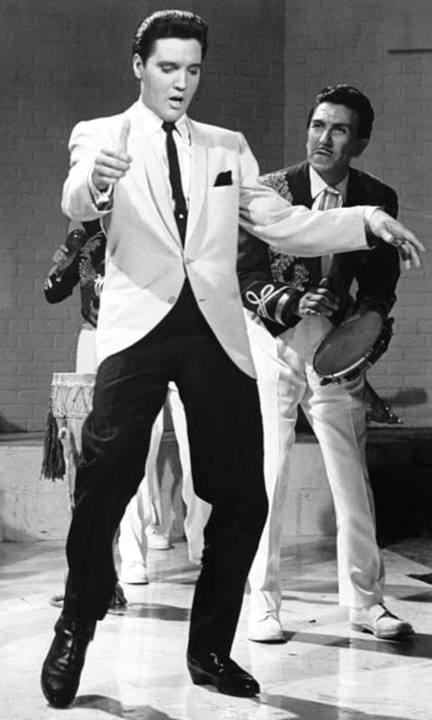
Again, Edith Head was the primary costume designer for Elvis Presley’s wardrobe in the movie
Fun in Acapulco (1963). Sy Devore was also on board designing particularly the shirts and tailored suits. The wardrobe for the film included: a short-sleeved sport shirt patterned in balanced block stripes of black, gold, brown, and taupe, all with a mottled effect; a rolled up long sleeved thin green striped shirt; cream-colored cotton trousers with slanted side pockets and button-through back pockets; a beige waist-length short-sleeve cotton shirt with a Lido collar; a blue waist-length short sleeve dupioni silk shirt with a Lido collar; a pair of navy blue swim trunks with wide white waistband and a white stripe down each side; loafers with tan canvas uppers and dark brown hard leather soles; a pair of black boots; and a white tailored sports jacket with black trousers for the Bossa Nova performance.
MOVIE SECTION
KISSIN’ COUSINS

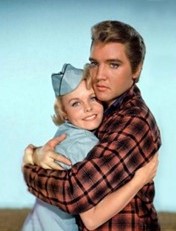
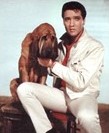
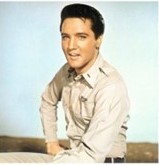
Though they did not receive screen credit, Gene Ostler and Sylvia Posner were the designers for Elvis’s wardrobe in the film, Kissin’ Cousins (1964).
Gene Ostler was a costume designer, known for his work on the hit television series, The Waltons (1972). He was born on June 2, 1918, in Frankfort, Indiana, and died on January 20, 1980 in Los Angeles, California.
Sylvia Posner is known for her work on The McMasters (1970), How to Seduce a Woman (1974), and
In God We Trust (or Gimme That Prime Time Religion) (1980).
MOVIE SECTION
VIVA LAS VEGAS
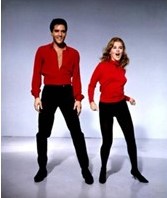
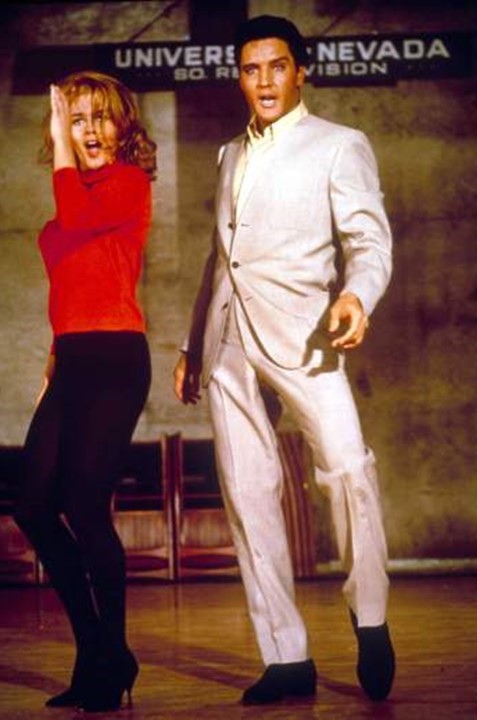
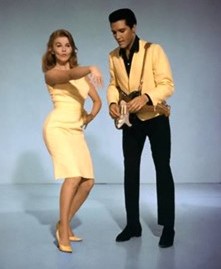
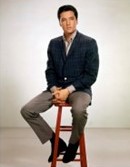
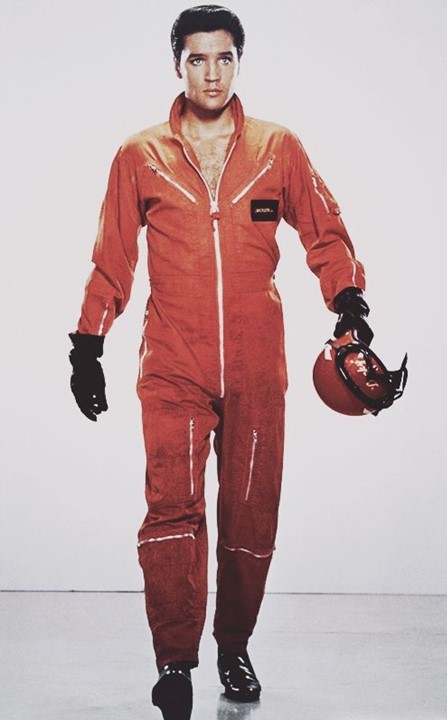
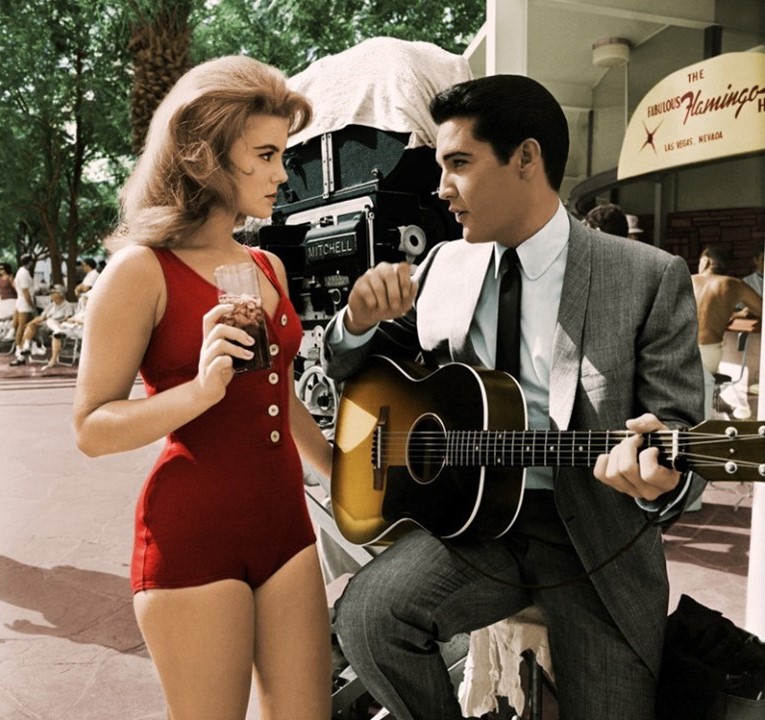
Donald Lee Feld (Donfeld) and Sy Devore were the costume designers for Elvis in Viva Las Vegas (1964).
Donfeld created the beige linen collarless suit. The matching flat front trousers rose to Elvis’s waist where the trouser waistband met the center button of the suit jacket. During the film where Elvis removed his jacket you can see the buckle-tab side adjusters and side pockets on the pants.
Sy Devore designed the gray sharkskin shawl-collared suit Elvis wore during the performance of
The Lady Loves Me.
The outfits worn by Ann-Margret in the 1964 movie Viva Las Vegas were created by Donfeld, which is the professional name of Donald Lee Feld.
Donfeld was a well-known costume designer who collaborated closely with Ann-Margret during the beginning of her career, helping to shape her well-known “sex kitten” image on screen. His designs for Viva Las Vegas are especially recognized for their bright colors and snug fits that matched her energetic dance performances alongside Elvis Presley, including her famous yellow dress and swimsuit. David Winters served as the choreographer for the film and worked with Ann-Margret to make sure the costumes were suitable for her dynamic dance moves.
In addition to Viva Las Vegas, Donfeld also designed costumes for Ann-Margret in The Cincinnati Kid (1965) and contributed to her early screen tests.
MOVIE SECTION
ROUSTABOUT
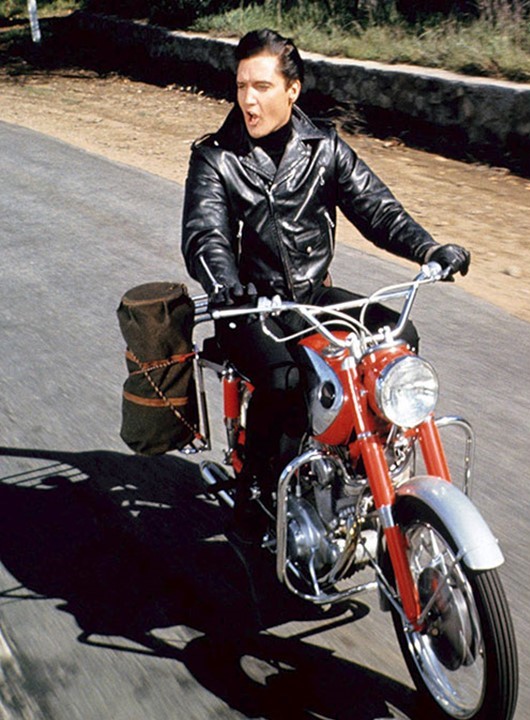

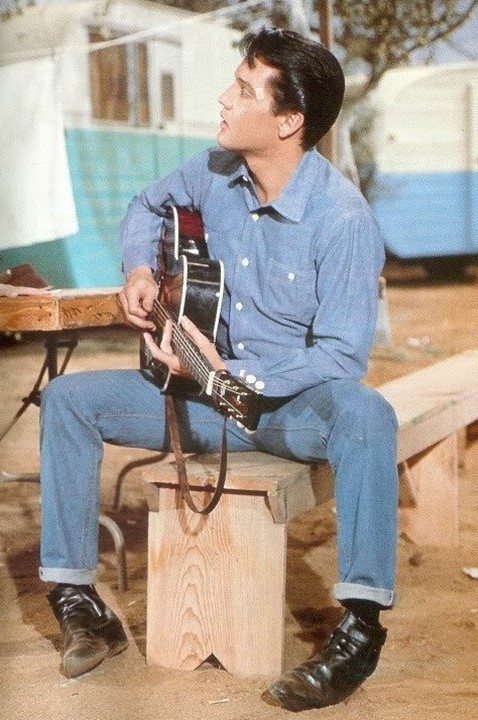
Edith Head was the costume designer for Elvis Presley’s wardrobe in the film Roustabout (1964).
Head was known for her close working relationships with actors and for creating designs that reflected the characters they portrayed. She is considered one of the most historically influential costume designers in film and holds the record for the most Academy Awards won by a woman. Her stunning designs for the musical numbers in White Christmas were unforgettable.
Some of the red dance costumes used in the film, worn by extras during the Carny Town song, were originally designed by Head for the movie White Christmas. They were repurposed for Roustabout a decade later.
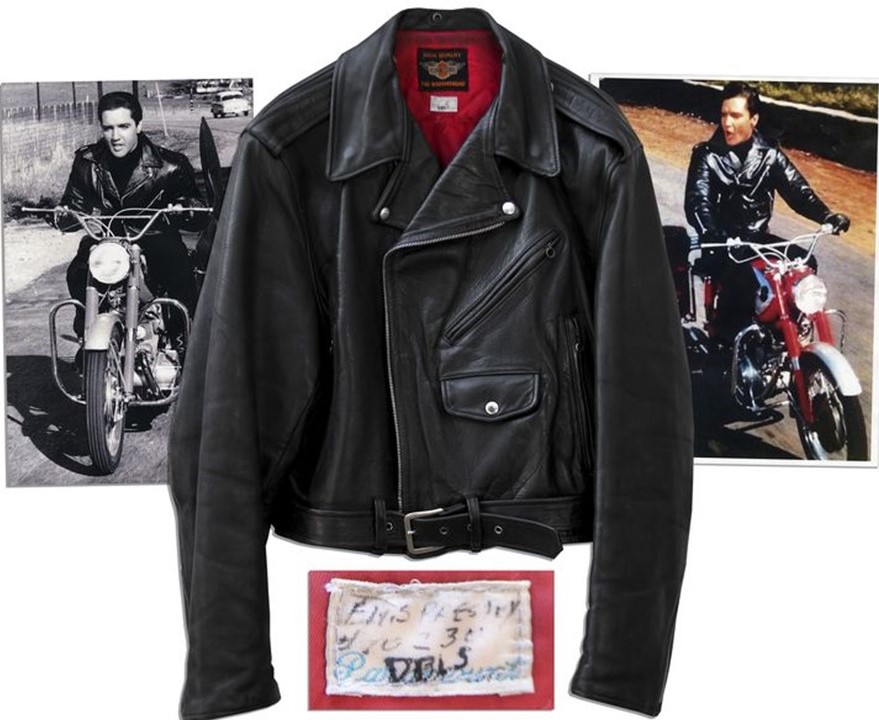
On August 31, 2019, the black leather jacket worn by Elvis was auctioned for $40,000, to Crowd Bidder through GWS Auctions. The jacket has an interior Harley Davidson Motorcycles label along with an additional Paramount label sewn-in and handwritten with “Elvis Presley” in black. The jacket was accompanied by an affidavit of authenticity from Memphis Mafia member Richard Davis on TCB letterhead.
MOVIE SECTION
GIRL HAPPY
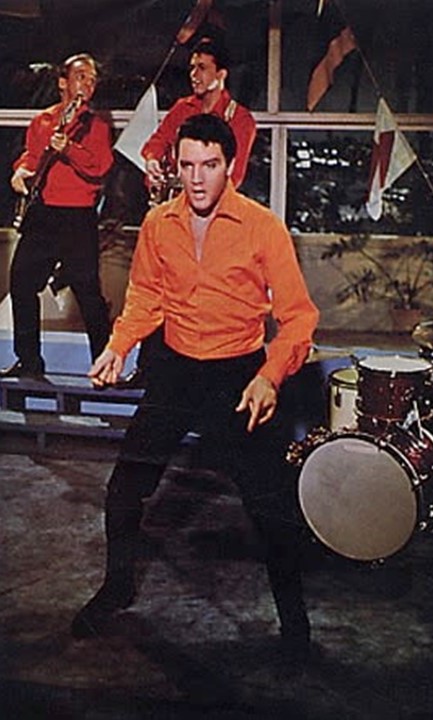


Elvis Presley’s wardrobe for the film Girl Happy was primarily designed by Lambert Marks at Western Costume Company. Marks was a key figure in designing the clothes for several of Elvis’s films which include Girl Happy, Spinout, and Stay Away, Joe.
The Western Costume Company was founded in 1912 by Louis L. Burns. It started out as a costume supply company for the earlier Western films. As time moved on, it developed into more than just western attire. It grew to become the largest and oldest costume houses in the United States for the film, television, and theater industries.
Located in North Hollywood, California, the Western Costume Company is still in business. It is a well-established costume rental and supply company still serving the film and television industry. Their immense inventory is well-known as the largest costume house in the United States.
MOVIE SECTION
TICKLE ME


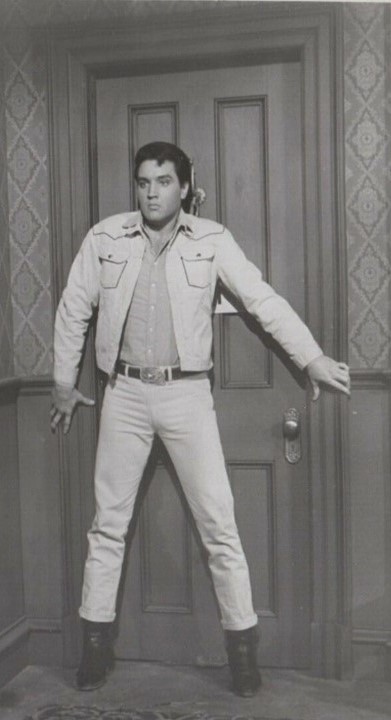
According to the Elvis Australia website, Elvis’s wardrobe for the film Tickle Me was designed by
Leah Rhodes.
Leah Rhodes won an Academy Award-for her costume designs for the 1948 movie
Adventures of Don Juan.
MOVIE SECTION
HARUM SCARUM
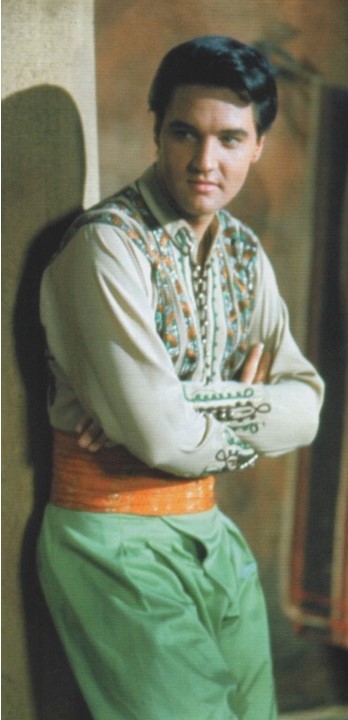


If you can make it through this film, you would notice the beautiful costumes. However, this was such a low-budget production you wonder why they spent so much time and money on the wardrobe. The truth is they did not.
Beau Vanden Ecker, Gene Ostler, and Margo Weintz were the uncredited designers for the costumes Elvis wore in Harum Scarum (1965).
The costumes worn in Harum Scarum, especially those worn by extras, were not exactly designed for this movie. These were reused from the film Kismet (1944) and its 1955 remake. Very little was purchased or designed for Harum Scarum. Even the sets were reused for this production.
MOVIE SECTION
FRANKIE AND JOHNNY
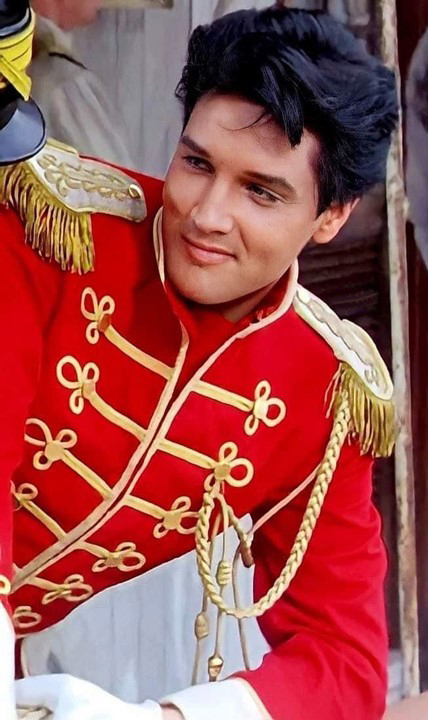
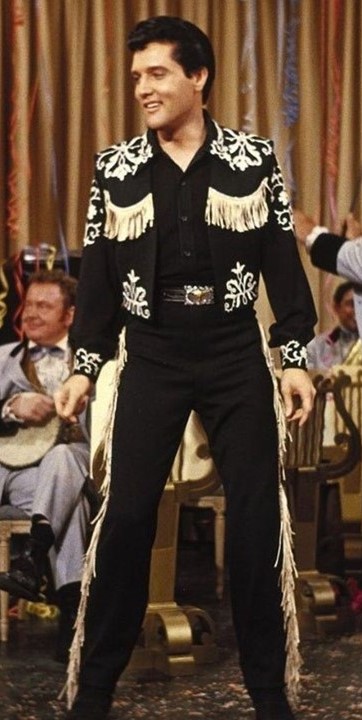
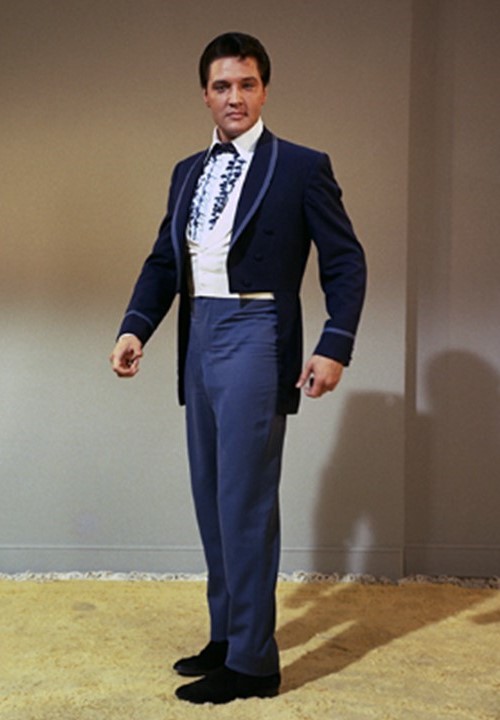
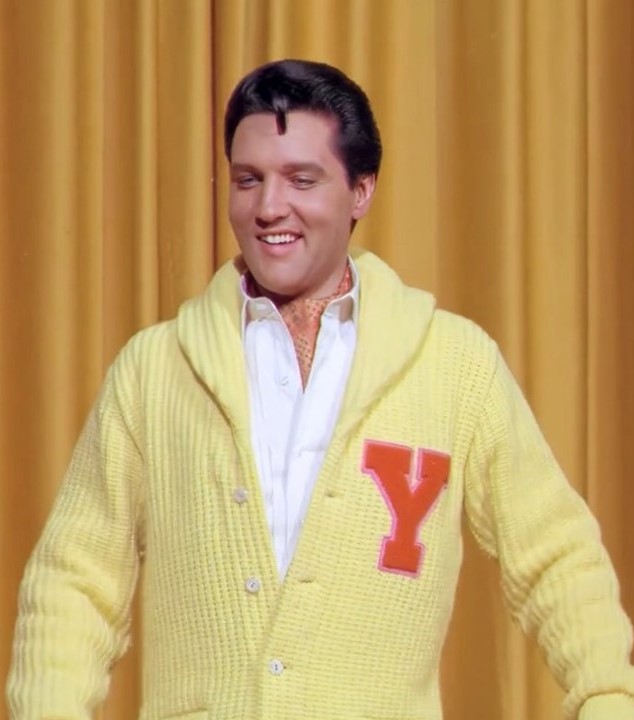
Designed by Gwen Wakeling, the costumes in Frankie and Johnny were visually engaging and perfectly captured the spirit of the characters.
Gwen Wakeling was born in Detroit, Michigan in 1901. After she graduated from high school, she got a job as a fashion artist in a department store. Cecil B. DeMille, the American filmmaker and actor, when he went to Paramount Pictures, he took Wakeling with him. In 1933, Wakeling went to work for Fox Films as the studio’s head costume designer. In 1941, due to a ruptured appendix, she quit Fox the following year and became a freelancer. She won an Oscar for costumes for the 1949 film,
Samson and Delilah.
Wakeling died on June 16, 1982.
The wardrobe coordinator for Frankie and Johnny was Wesley Jefferies. A wardrobe coordinator is an expert who manages all elements of clothing and costumes for a production for film, theater, or another show. They work in partnership with the director, production designer, and costume designer to create the overall appearance of characters and make sure the costumes fit the production’s vision.
Jeffries was born on July 16, 1906, in Provo, Utah. Wesley worked as a wardrobe coordinator and was a costume designer. He is known for the movies The Manchurian Candidate (1962), The Satan Bug (1965), and The Party (1968).
Wesley died on July 12, 2000, in Palm Desert, California.
MOVIE SECTION
PARADISE, HAWAIIAN STYLE
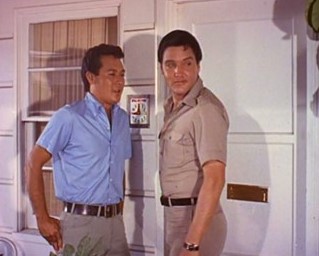
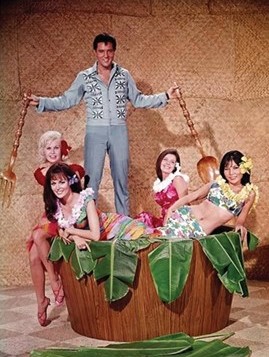
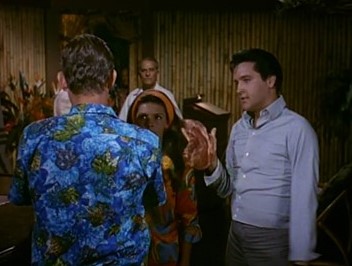
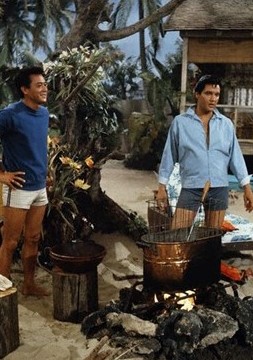
Edith Head designed Elvis’s wardrobe for the movie Paradise, Hawaiian Style (1966). Head was not your run of the mill talent. She had a special gift for capturing the personality of a movie character with her costumes.
MOVIE SECTION
SPINOUT
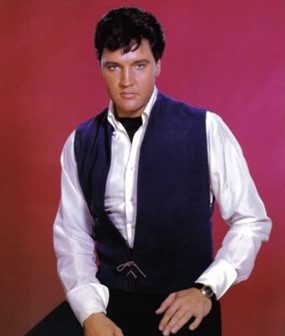
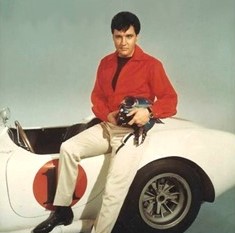

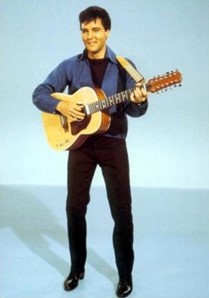
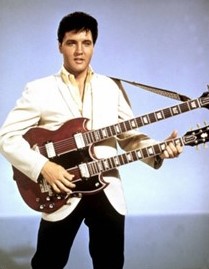
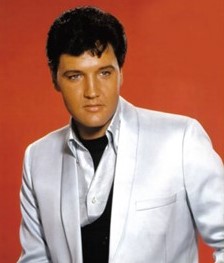
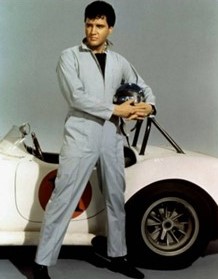
Elvis began assisting in the designs to the costumes he wore in movies in late 1960s. In the handwritten notes on an 8.5” x 11” sheet with a sketch of a vest for the movie Spinout (1966), he lists five different wardrobe combinations. The handwritten list was obtained from the Elvis Presley Museum.
Below is Elvis Presley’s handwritten list which was placed in a large wall display and auctioned on August 14, 2012.

Elvis Presley’s Handwritten Spinout Costume Sketch and Wardrobe List.
MOVIE SECTION
EASY COME, EASY GO
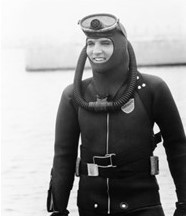
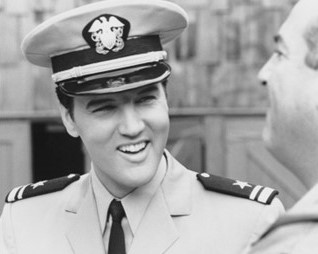

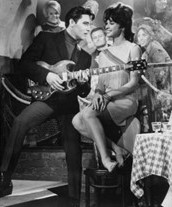

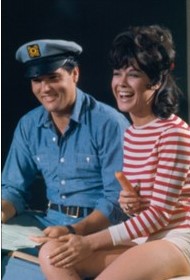
In the AFI Catalog, the credits state that Edith Head designed Elvis’s wardrobe for the movie
Easy Come, Easy Go (1967) (see: https://catalog.afi.com/Catalog/moviedetails/19884#3). On the Imbd website, it states the same (see https://www.imdb.com/name/nm0372128/?showAllCredits=true).
I mention this because AI has stated quite firmly that it was Bill Belew who designed Elvis’s wardrobe for Easy Come, Easy Go, but Belew didn’t begin designing for Elvis until 1968. This tells me that AI shouldn’t be fully trusted.
MOVIE SECTION
DOUBLE TROUBLE

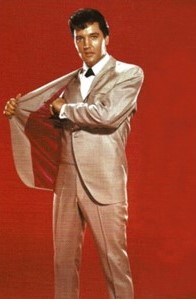
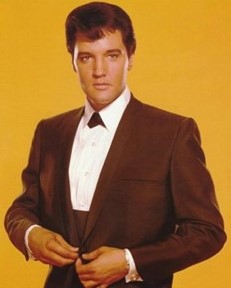
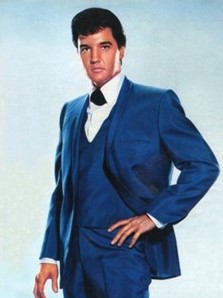
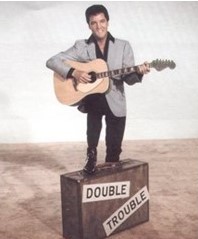
Double Trouble costumes had a bit of a James Bond feel to them. Elvis’s wardrobe designer for the movie Double Trouble (1967) was Donald Lee Feld (Donfeld), who also designed the costumes for
Viva Las Vegas.
The corduroy waist-jacket (below left) was sold for $25,400 with a black and white promotional photograph (below right) of Elvis wearing the jacket and a DVD.

MOVIE SECTION
CLAMBAKE
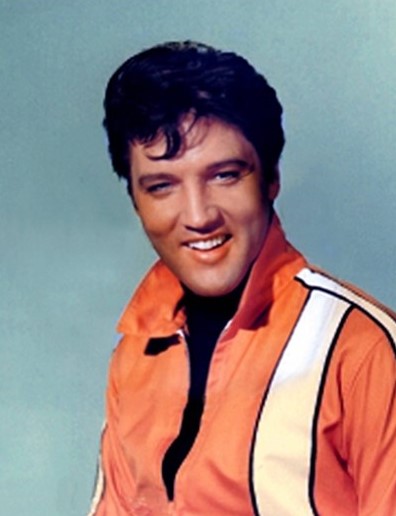
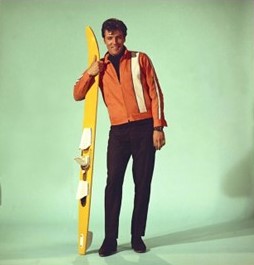
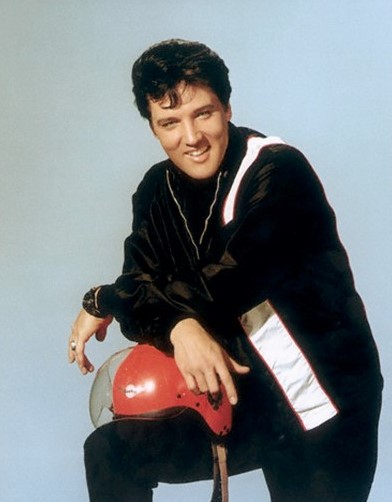

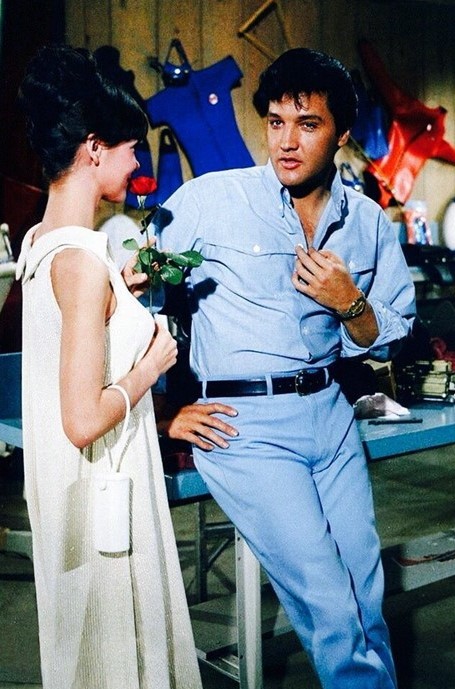
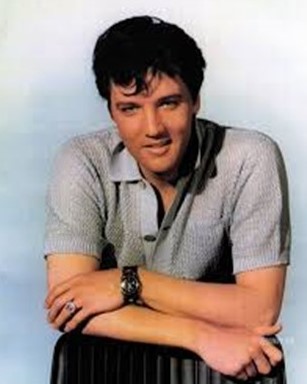
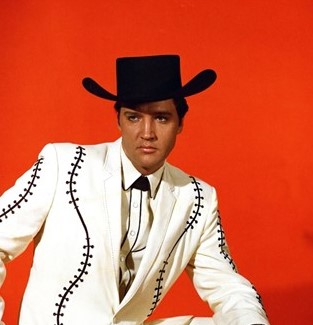
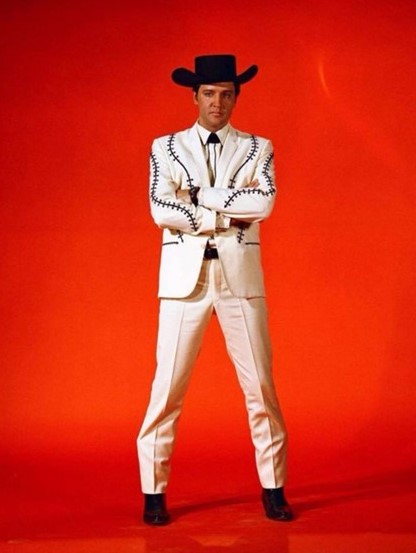
For the movie Clambake, Nudies designed the white “Millionaire Suit” worn by Elvis. Out of everything Elvis wore in the movie, this is the costume most people remember.
Nudie Cohn was born December 15, 1902, in Kyiv, Ukraine. He became an American fashion designer who made the flamboyant western suits popular. These suits became known as “Nudie Suits”. Nudie was also the creator of Elvis’s 1957 gold lamé suit. Cohn passed away on May 9, 1984, in Burbank, California.
MOVIE SECTION
STAY AWAY, JOE
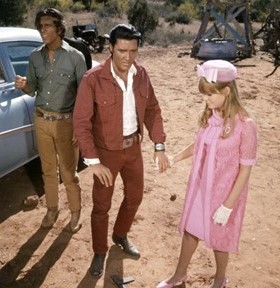
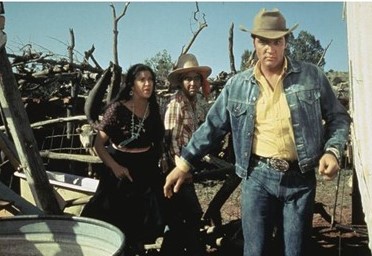
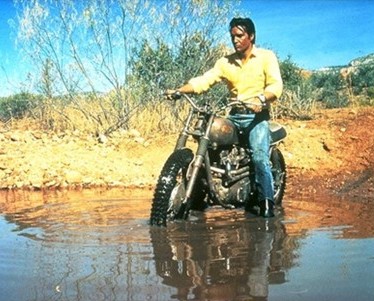
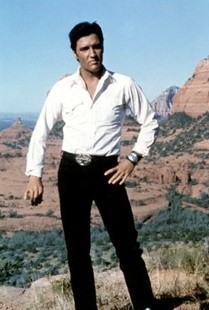
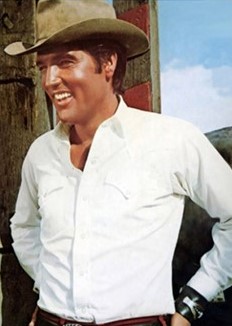
For Stay Away, Joe, Elvis’s wardrobe consisted of tough looking western attire of denim jeans and cowboy hats. The entire cast wardrobe was created by Lambert Marks who also worked on notable films like Girl Happy, Spinout, Point Blank, White Line Fever, and Paradise Alley.
MOVIE SECTION
SPEEDWAY
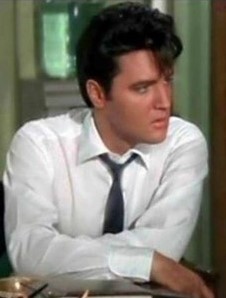
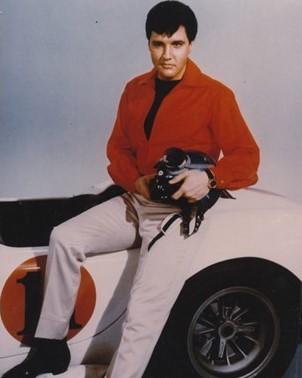
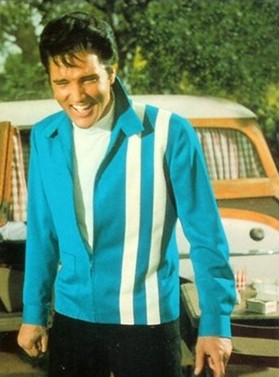
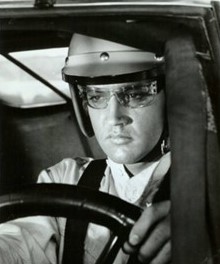
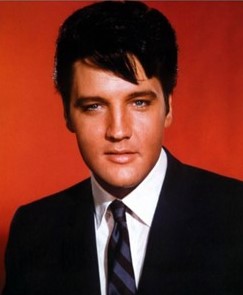

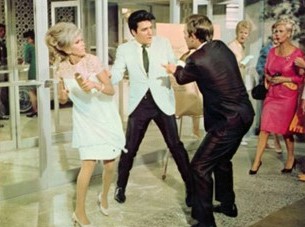

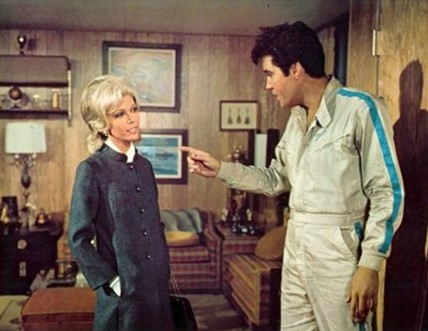
Based on the information available, there doesn’t seem to be a single costume designer credited for the entirety of Elvis Presley’s wardrobe in the movie Speedway.
Sy Devore, a Hollywood tailor known for dressing celebrities, custom-made the black pants Elvis wore in the movie.
The white racing jumpsuit worn by Elvis in the film has a “Hinchman” brand label, according to auction listings.
It is probable that Elvis’s Speedway wardrobe was a collaborative effort involving several designers and tailors, rather than the work of a single credited costume designer for the film.
MOVIE SECTION
LIVE A LITTLE, LOVE A LITTLE
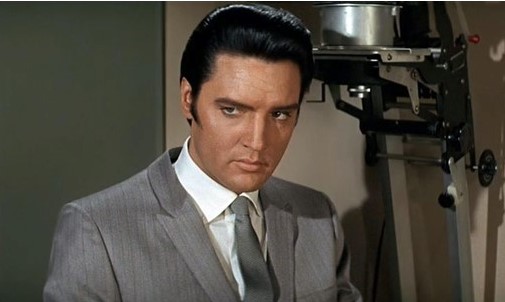
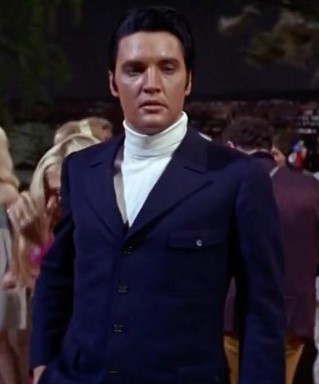
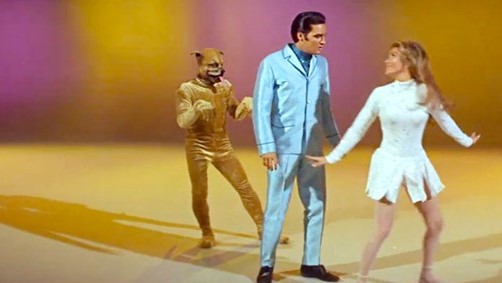
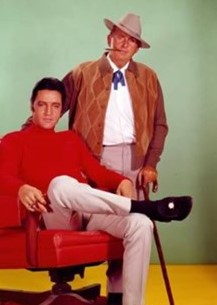
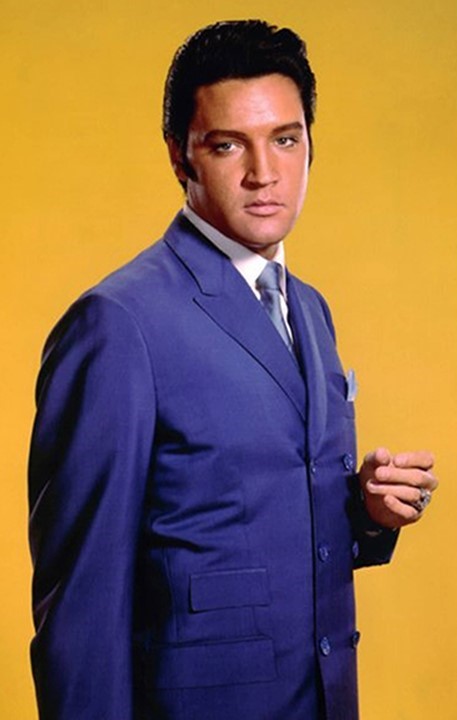
For the 1968 movie Live a Little, Love a Little, Elvis’s wardrobe was designed by Sy Devore. For this film, Devore created a winning series of conservative suits and ties, aiming to present Elvis who played Greg Nolan as a “smart, well-dressed young businessman”. According to Elvis Austrailia, the wardrobe included ten suits which included the three-button jacket for his song A Little Less Conversation. In addition to the shirts and suits, there were four sports jackets, thirty shirts (I’m guessing they included the light blue mock turtleneck in with the shirts), fifteen pairs of slacks, two cashmere coats, and fifty-five ties.
MOVIE SECTION
CHARRO
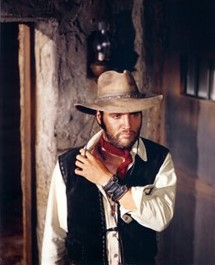
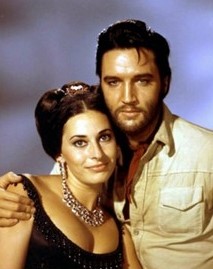
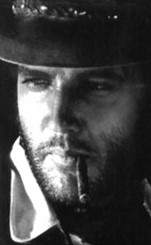
In what seems like an attempt to mimic the look of the Clint Eastwood three A Fistful of Dollars (1964), For a Few Dollars More (1965), and The Good, the Bad, and the Ugly (1966), the movie Charro, IMBd credits Robert Fuca for Elvis’s wardrobe along with the movie’s entire costuming for the male cast. They also credit Violet B. Martin for the costumes for the female cast.
Nudies designed the hats for the film.
MOVIE SECTION
THE TROUBLE WITH GIRLS

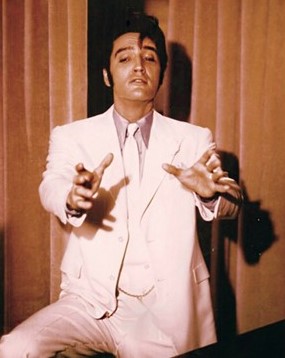

According to Elvis Australia, Elvis’s wardrobe for the movie The Trouble With Girls was designed by the MGM wardrobe department. Sy Devore, Elvis’s personal tailor worked on some of the costumes, but the studio’s wardrobe department handled most of the costuming.
MOVIE SECTION
CHANGE OF HABIT

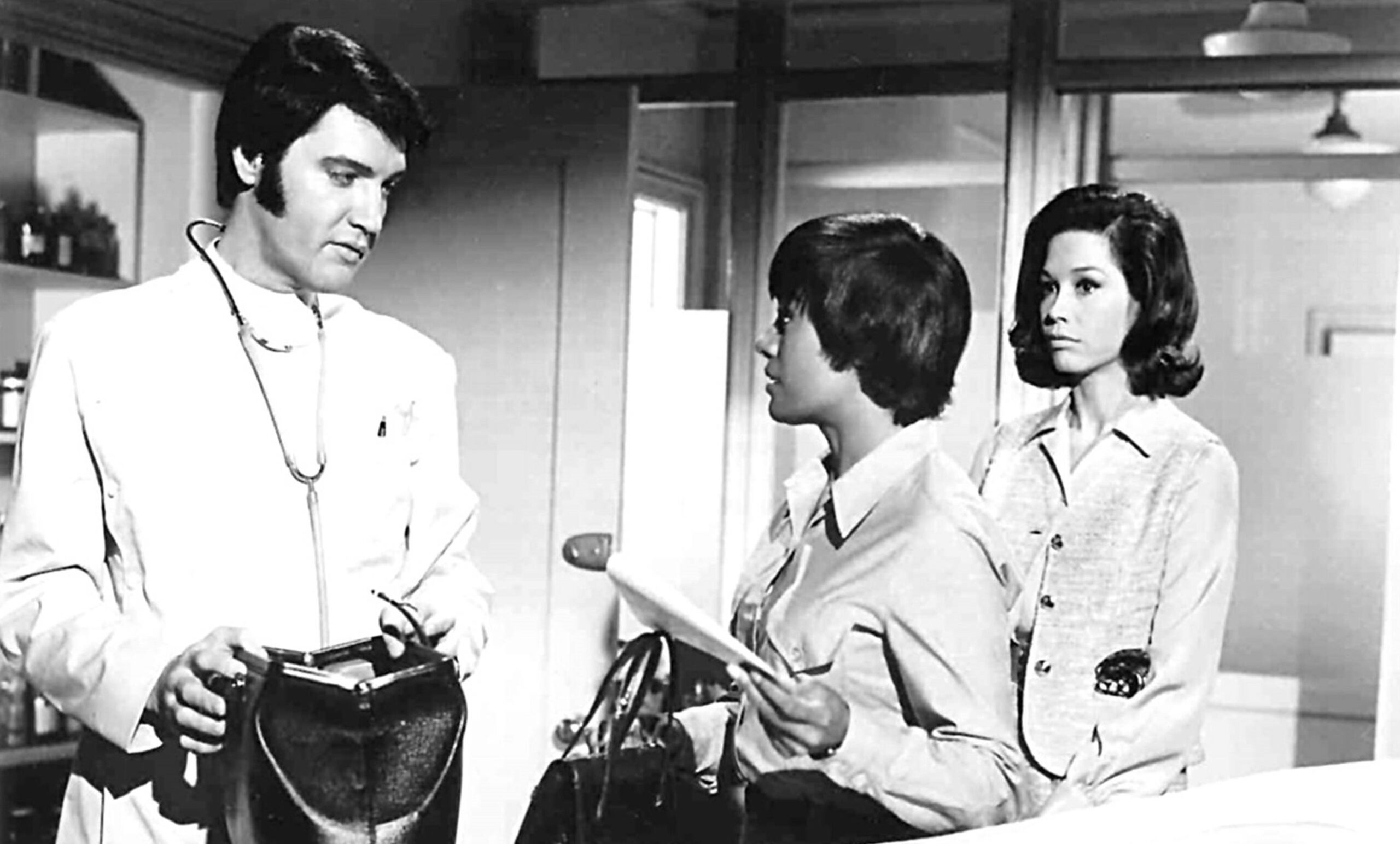

Elvis’s wardrobe in his final movie Change of Habit (1969) was designed by Helen Colvig.
Helen Colvig was born in the United States on April 8, 1922. She is known for her designs for the films Psycho (1960), The Andromeda Strain (1971), Play Misty for Me (1971), and Willy Wonka & the Chocolate Factory (1971).
I attempted to find out Colvig’s whereabouts or whether she passed away, but that information was not available. If she is still alive, she’s kickin’ it at 103 years old.
TELEVISION APPEARANCE
DECEMBER 3, 1968, SINGER PRESENTS ELVIS
BETTER KNOWN AS THE ’68 COMEBACK SPECIAL


There were several wardrobe changes during the ’68 Comeback Special. However, the two garments that stood out and most people remember are the black leather and the white suit.
During this period in Elvis’s career, we are introduced to Bill Belew who is credited with designing Elvis’s wardrobe for the show. Belew, an American designer, began designing Elvis’s wardrobe in 1968 until Elvis’s death in 1977.